You Keep Hearing You Should Read the Psalms — But They Feel Like Someone Else's Words
You open your Bible to the Psalms because everyone says they're comforting. But halfway through, you realize you're just scanning words. They're beautiful, sure — but they don't feel like they're speaking to you.
Maybe you've wondered if you're doing it wrong. Or if the Psalms are meant for people who are more poetic, more emotional, more spiritually tuned-in than you are.
Here's the truth: the Psalms weren't written to impress you. They were written by real people in the middle of real life — fear, confusion, anger, gratitude, doubt. And they're still here because they work. Not as background noise, but as a way to actually process what you're feeling and bring it before God.
You don't need to become someone else to connect with them. You just need a different approach.
Start With One Psalm That Matches Where You Are Right Now
The biggest mistake? Trying to read the Psalms like a novel, start to finish. That's not how they were written, and it's not how they work best.
The book of Psalms is a collection — 150 prayers, songs, and laments written over centuries. Some are celebrations. Some are cries for help. Some are quiet reflections. They're meant to meet you wherever you are.
So instead of forcing yourself through Psalm 1, ask: What do I actually need today?
Feeling anxious? Try Psalm 23 or Psalm 46. Angry or betrayed? Psalm 13 or Psalm 109 don't sugarcoat it. Grateful? Psalm 103 or Psalm 136. Exhausted and questioning everything? Psalm 42 gets it.
Pick one. Read it slowly. Let it reflect what you're carrying instead of trying to force yourself to feel something you don't.

Read It Out Loud — Even If It Feels Awkward at First
This one sounds simple, but it changes everything. The Psalms were written to be spoken and sung, not silently scanned.
When you read them out loud, your brain slows down. You hear the rhythm. You notice repeated phrases. You feel the weight of certain words in a way you miss when you're just reading in your head.
Try it with Psalm 46:1-3: "God is our refuge and strength, an ever-present help in trouble. Therefore we will not fear, though the earth give way and the mountains fall into the heart of the sea, though its waters roar and foam and the mountains quake with their surging."
When you say that out loud, you're not just absorbing information. You're letting your own voice carry the truth into the room you're sitting in. You're making it yours.
It might feel strange the first time. That's okay. Keep going.
Notice the Structure — It's Not Random
Most Psalms follow a pattern, and once you see it, they start to make more sense.
Many open with a cry or a question: How long, Lord? Why are you so far away? Where are you? Then they move through the struggle — naming the fear, the doubt, the pain. And most end with a turn toward trust, even if it's quiet and uncertain.
Look at Psalm 13:1-2, 5-6: "How long, Lord? Will you forget me forever? How long will you hide your face from me? How long must I wrestle with my thoughts and day after day have sorrow in my heart? ... But I trust in your unfailing love; my heart rejoices in your salvation. I will sing the Lord's praise, for he has been good to me."
That movement — from honest struggle to grounded trust — is the shape of real faith. It doesn't skip over the hard part. It walks through it.
When you notice that structure, you give yourself permission to do the same. You don't have to arrive at peace instantly. You can start where you are and let the Psalm guide you forward.

Let the Psalmist Say What You Can't
Sometimes you don't have the words for what you're feeling. Or the words you do have feel too raw, too angry, too much.
That's exactly when the Psalms become most useful. They give you language.
The psalmists didn't hold back. They complained. They questioned. They asked God why He wasn't showing up. And God included those prayers in Scripture — which means He can handle yours too.
Psalm 22:1-2 says, "My God, my God, why have you forsaken me? Why are you so far from saving me, so far from my cries of anguish? My God, I cry out by day, but you do not answer, by night, but I find no rest."
You're allowed to feel that. And when you read it in the Psalms, you realize you're not the first person to wonder if God is listening. You're in a long line of people who brought their doubts directly to Him — and stayed.
Pray the Psalm Back to God in Your Own Words
Once you've read a Psalm, don't just close your Bible and move on. Let it become your starting point.
Take one verse or phrase that stood out. Then say it back to God in your own words, shaped around your actual life.
If you read Psalm 34:4 — "I sought the Lord, and he answered me; he delivered me from all my fears" — you might pray: God, I'm seeking you right now. I don't feel answers yet, but I'm asking you to meet me in this fear. Help me trust you're here even when I can't see it.
You're not performing. You're not trying to sound spiritual. You're letting the Psalm give you a framework, and then filling it in with what's real for you today.
That's connection. That's how ancient words become present help.
Keep a Running List of Psalms That Hit Different
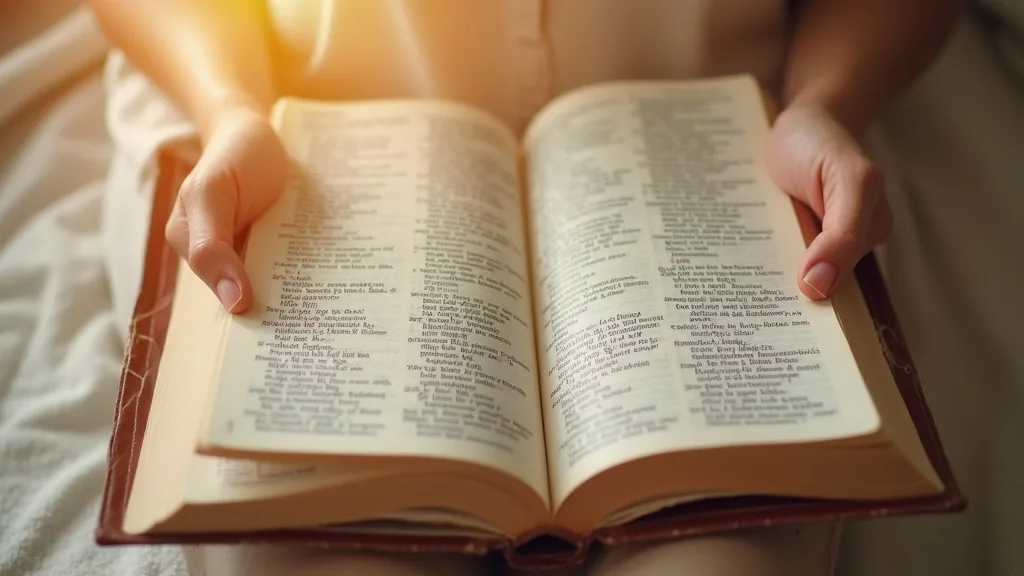
Not every Psalm will resonate with you right now. And that's fine. But when one does — when you read a verse and feel like someone just put words to exactly what you've been carrying — mark it.
Write it down. Save it in your phone. Bookmark the page. Come back to it.
Over time, you'll build your own collection of Psalms that feel like they were written for your specific life. They become the ones you return to when you need steadying, when you need language, when you need to remember you're not alone in this.
This isn't about being a Bible scholar. It's about knowing where to turn when life gets heavy and you need something solid to hold onto.
You Don't Have to Feel Inspired Every Time
Some days, reading the Psalms will feel like exactly what you needed. Other days, it'll feel like you're just going through the motions.
Both are okay. Connection isn't always emotional. Sometimes it's just showing up, reading the words, and letting them sit quietly in the background of your day.
The Psalms work slowly. They shape you over time, not all at once. You might not feel different after one reading — but after ten, after thirty, you'll notice the language starting to show up in your thoughts. The truths starting to anchor you in moments you didn't expect.
That's the point. Not a lightning-bolt experience, but a steady, grounded practice that meets you where you are and walks with you from there.
✦ Scripture Anchor
The Lord is close to the brokenhearted and saves those who are crushed in spirit. — Psalm 34:18
One small step
Choose one Psalm today based on what you're actually feeling — not what you think you should feel. Read it out loud, slowly. Let it be a conversation, not a task.
The Psalms aren't a test you pass or fail. They're a gift — written by people who knew what it felt like to be human and still wanted to talk to God anyway. You can start exactly where you are, with exactly what you're carrying. That's enough.
Save this for later — and if it helped, explore more at FaithHavenJournal.com.