
You've Set the Alarm. You've Bought the Journal. And Still, Nothing Stuck.
Maybe you woke up early once or twice, sat down with your Bible, and felt... nothing. Or maybe you made it a week before life got busy and the habit disappeared. You're not failing at faith. You're just trying to build something real in the middle of a full, complicated life.
Here's what most advice gets wrong: it assumes you need more discipline, a better plan, or the perfect morning routine. What you actually need is permission to start smaller — and a structure that works with your life, not against it.
A quiet time with God isn't about performing a ritual perfectly. It's about creating space to hear Him, even when that space is brief, messy, or squeezed between everything else. And you can start today, right where you are.
Stop Trying to Copy Someone Else's Routine
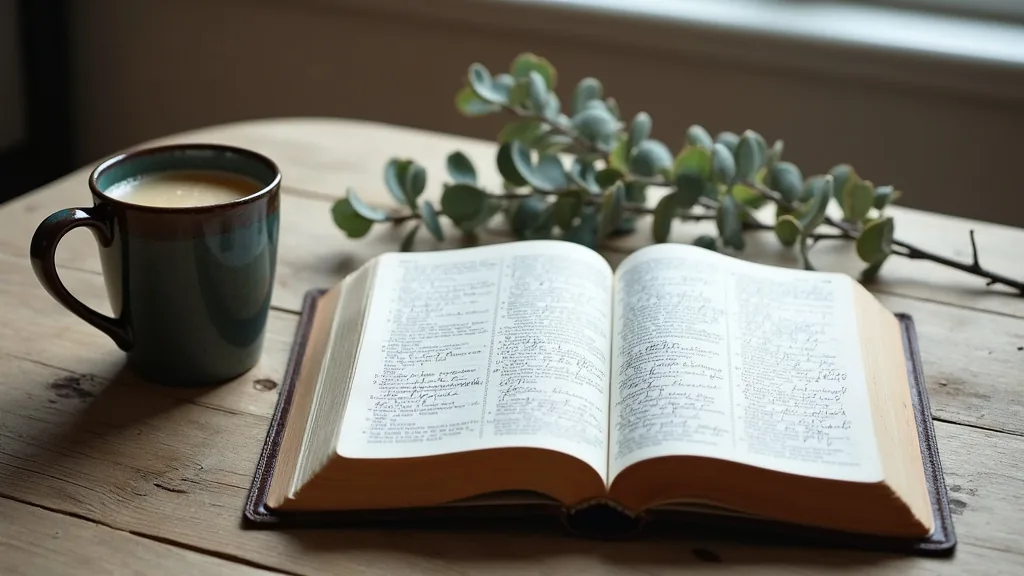
You've probably seen the Instagram posts: someone's beautiful morning setup with coffee, a leather-bound Bible, and perfect lighting. It looks inspiring. It also might have nothing to do with your actual life.
If you're not a morning person, forcing a 5 a.m. quiet time will feel like punishment. If you have young kids, an hour of uninterrupted silence isn't realistic. And if your brain works better in motion, sitting still might make you more restless, not more focused.
Your quiet time doesn't have to look like anyone else's. It just has to be yours — built around when you're actually available and how you actually connect with God. Some people pray while they walk. Some read Scripture during lunch breaks. Some sit in their parked car before going inside after work.
The goal isn't perfection. It's presence. And presence looks different for everyone.
What Does Your Quiet Time Look Like?
3 questions · find your version · no wrong answers
1. When do you have the most mental space?
2. How much uninterrupted time can you realistically protect?
3. How do you best connect with God?
Start With Five Minutes, Not Fifty
One of the biggest reasons quiet times fail is that we set the bar too high. We think if we can't do thirty minutes of Bible study and journaling, it doesn't count. So we do nothing instead.
But five focused minutes is better than thirty distracted ones. And five consistent minutes will grow into more over time — not because you're forcing it, but because you're building trust with the habit.
Here's what five minutes can look like: Read one short passage of Scripture. Pray one honest sentence. Sit quietly for sixty seconds and just breathe. That's it. That's enough to start.
"Be still, and know that I am God; I will be exalted among the nations, I will be exalted in the earth." — Psalm 46:10. Stillness doesn't require a time minimum. It requires intention.
Pick One Thing to Read (and Stick With It for a Week)
Decision fatigue kills quiet times faster than anything else. If you have to figure out what to read every single day, you'll eventually stop showing up.
Instead, pick one thing and commit to it for a week. Read the same Psalm every morning for seven days. Work through one chapter of Philippians, a few verses at a time. Go through the Gospels in order, one story per day.
Repetition isn't boring — it's grounding. When you return to the same passage multiple times, you notice things you missed before. You let it settle deeper. You stop skimming and start absorbing.
Here's a simple starting point: Philippians 4:6-7. "Do not be anxious about anything, but in every situation, by prayer and petition, with thanksgiving, present your requests to God. And the peace of God, which transcends all understanding, will guard your hearts and your minds in Christ Jesus." Read it once a day for a week. Notice what shifts.
Pray Like You're Talking to Someone Who Already Knows
You don't have to use special language. You don't have to sound religious. You don't have to say the right things in the right order.
God already knows what you're thinking. He already knows what you need. Prayer isn't about informing Him — it's about opening yourself to Him. And that can be as simple as saying what's true right now.
"I'm overwhelmed today." "I don't know what to do about this." "I'm grateful for this one small thing." "Help me see what I'm missing." These are all prayers. Honest ones.
Jesus modeled this kind of directness. In the garden, He prayed, "My Father, if it is possible, may this cup be taken from me. Yet not as I will, but as you will" (Matthew 26:39). No performance. No pretense. Just honesty and surrender.
Your prayers can sound like that too. Real words. Real feelings. Real trust.

Build It Into Something You Already Do
The easiest way to make a habit stick is to attach it to something you already do every day. This is called habit stacking, and it works because you're not creating a brand-new routine from scratch — you're adding one small step to something that's already automatic.
If you drink coffee every morning, open your Bible while the coffee brews. If you take a lunch break, spend the first five minutes reading a Psalm. If you sit in your car before heading into work, pray before you turn off the ignition.
The key is consistency of timing, not length. Same time, same trigger, same small action. Over time, it becomes part of the rhythm of your day — not something you have to remember or force.
Attach It to Something You Already Do
Find your trigger · add one small step · let it become automatic
Write Your Own Stack
"After I _________________________, I will _________________________."
Same trigger, same time, same small step. That's how habits form.
Let Go of the Guilt When You Miss a Day
You will miss days. You'll sleep through your alarm. You'll have a morning that explodes before you even get out of bed. You'll forget entirely because life got loud and full.
That doesn't mean you failed. It means you're human. And God's not keeping score.
The Enemy loves to use guilt as a weapon. He'll whisper that you've already broken the streak, so why bother starting again? That you're not consistent enough to be taken seriously. That God is disappointed.
But here's what Scripture actually says: "The steadfast love of the Lord never ceases; his mercies are new every morning; great is your faithfulness" (Lamentations 3:22-23). Every morning is a fresh start. Not because you earned it, but because He's faithful.
If you miss a day, just come back the next one. No apology needed. No explanation required. Just show up again.

Use a Simple Framework So You Don't Have to Think
When you're tired or distracted, structure helps. You don't have to reinvent your quiet time every day. You just need a simple framework you can return to.
Here's one that works: Read. Reflect. Respond. That's it.
Read a short passage of Scripture — even just a few verses. Reflect by asking one question: What is this showing me about God? Or what is this showing me about myself? Respond with one honest prayer based on what you just read.
This takes five minutes. It keeps you from overthinking. And it moves you from information to interaction, which is where real growth happens.
Remember: This Isn't About Earning Anything
A quiet time isn't a transaction. It's not something you do to make God love you more, to prove you're serious, or to check a box on your spiritual to-do list.
It's an invitation. A space you create because you want to know Him better. Because His presence steadies you. Because time with Him changes how you see everything else.
"Come to me, all you who are weary and burdened, and I will give you rest" (Matthew 11:28). He's not asking you to show up perfectly. He's asking you to show up honestly. Tired, distracted, unsure — it doesn't matter. He's already there, waiting.
✦ Scripture Anchor
"Be still, and know that I am God; I will be exalted among the nations, I will be exalted in the earth." — Psalm 46:10
One small step
Choose one time tomorrow — morning, lunch, or evening — and spend just five minutes reading one passage of Scripture. Don't worry about journaling or praying eloquently. Just read, breathe, and notice what stands out.
You don't need a perfect plan. You don't need an hour of silence. You just need to start — five minutes, one verse, one honest prayer. That's enough. That's how it begins.
Save this for later — and if it helped, explore more at FaithHavenJournal.com.
Free Printable · 2 Pages
Fresh Start — For When You've Been Away
No apology needed. No explanation required. One page to use the day you come back — however long you've been gone.