
Why Most Prayer Journals Feel Like Homework
You bought the journal. Maybe it had pretty floral pages or a leather cover that felt serious and intentional. You opened it once, wrote "Dear God" at the top, and then... nothing. Or everything. A messy brain dump that didn't feel like prayer at all.
Here's what no one tells you: a prayer journal isn't supposed to be a performance. It's not about perfect handwriting or poetic language or filling every page. It's a tool — and like any tool, it only works when you know what you're actually using it for.
If your prayer journal has been gathering dust because it felt forced or fake, you're not doing it wrong. You just haven't found a structure that fits the way you actually pray.
What a Prayer Journal Actually Does
A prayer journal isn't a diary. It's not a gratitude list. It's not a Bible study notebook. It can include all of those things, but its real purpose is simpler: it helps you stay present with God when your mind wants to wander.
Writing slows you down. It forces you to finish a thought instead of jumping to the next one. And over time, it creates a record — not of your spiritual performance, but of God's faithfulness in the middle of your ordinary, messy life.
Psalm 77:11-12 says this: "I will remember the deeds of the Lord; yes, I will remember your miracles of long ago. I will consider all your works and meditate on all your mighty deeds." A prayer journal is where you do that work — where you remember, consider, and see patterns you'd otherwise miss.
Start With One Question, Not a Blank Page
The blank page is the enemy. It's why you freeze. So don't start there.
Start with a prompt. Pick one question and answer it honestly. Here are a few that work:
- What's weighing on me right now?
- Where do I need help today?
- What am I grateful for this week?
- What's one thing I've been avoiding talking to God about?
You don't need to answer all of them. Pick one. Write three sentences. That's it. You've prayed.
Philippians 4:6-7 reminds us: "Do not be anxious about anything, but in every situation, by prayer and petition, with thanksgiving, present your requests to God. And the peace of God, which transcends all understanding, will guard your hearts and your minds in Christ Jesus." Your journal is where you present those requests — not perfectly, just honestly.

Use Structure, Not Rules
Here's a simple framework you can use every time you open your journal. It's not a rule — it's a rhythm.
1. Name where you are. One sentence about your current state. Tired. Anxious. Grateful. Confused. Just name it.
2. Bring it to God. Write it as a prayer. "God, I'm overwhelmed by this week. I don't know how to handle [specific thing]. I need your help."
3. Anchor in Scripture. Write out one verse that speaks to what you just named. Copy it word for word. Let it sit there on the page.
4. End with one next step. What's one small, practical thing you can do today in response? Not a spiritual to-do list — just one grounded action.
This takes five minutes. Maybe ten if you linger. It's not about length. It's about showing up.
Write Like You're Talking, Not Performing
Your prayer journal is between you and God. No one else will read it. So stop trying to sound like someone else.
Write the way you actually talk. Use contractions. Use sentence fragments if that's how your brain works. If you're mad, write that. If you're confused, say so. If you don't know what to pray, write "I don't know what to pray."
Romans 8:26 says: "In the same way, the Spirit helps us in our weakness. We do not know what we ought to pray for, but the Spirit himself intercedes for us through wordless groans." You don't have to have the right words. You just have to show up with the real ones.
God isn't grading your grammar. He's listening to your heart.

Track Patterns, Not Perfection
One of the most powerful things a prayer journal does is reveal patterns you can't see in the moment.
When you flip back through weeks or months of entries, you'll notice things. The same worry showing up again and again. A request you forgot you prayed — that got answered quietly. A hard season you thought would break you, but didn't.
This is where faithfulness becomes visible. Not in one big moment, but in the slow accumulation of small ones.
Lamentations 3:22-23 reminds us: "Because of the Lord's great love we are not consumed, for his compassions never fail. They are new every morning; great is your faithfulness." Your journal becomes proof of that faithfulness — a record of mornings when His compassion showed up, even when you didn't feel it.
What to Do When You Miss Days (or Weeks)
You will miss days. Maybe weeks. That's not failure. That's life.
Don't try to catch up. Don't write a guilt-filled entry about how long it's been. Just open the journal and start again. Today. Right now.
Write one sentence: "I'm here again." That's enough.
God isn't keeping score. He's not disappointed. He's just glad you're back. Your prayer journal is a tool for connection, not a test of consistency.
Keep It Simple, Keep It Real
You don't need a fancy system. You don't need color-coded tabs or printed inserts or a specific brand of journal. You need a notebook and a pen and five minutes of honesty.
Some days you'll write a page. Some days you'll write three words. Both count.
The goal isn't to become a better journal-keeper. The goal is to become more aware of God's presence in your actual, daily life. The journal is just the tool that helps you notice.
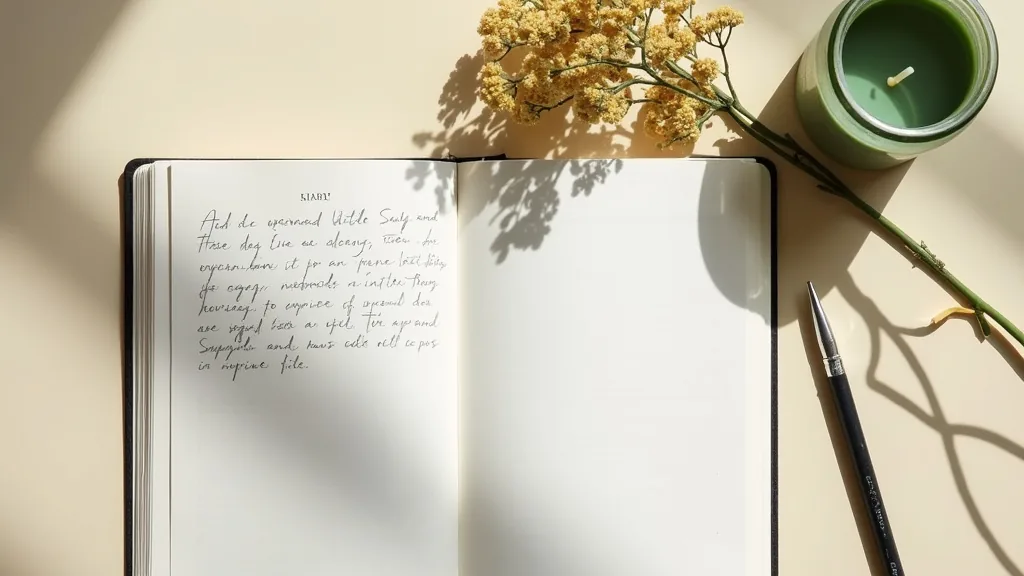
✦ Scripture Anchor
"Come near to God and he will come near to you." — James 4:8
One small step
Open your journal today and write one honest sentence about where you are right now. That's it. No pressure to make it sound right — just show up and start there.
A prayer journal works when it stops being about the journal and starts being about the conversation. It's not another thing to get right. It's a quiet space where you can be honest, messy, and fully yourself — and know that God is listening.
Start small. Stay consistent when you can. Come back when you can't. Let it be a tool, not a test.
Save this for later — and if it helped, explore more at FaithHavenJournal.com.